
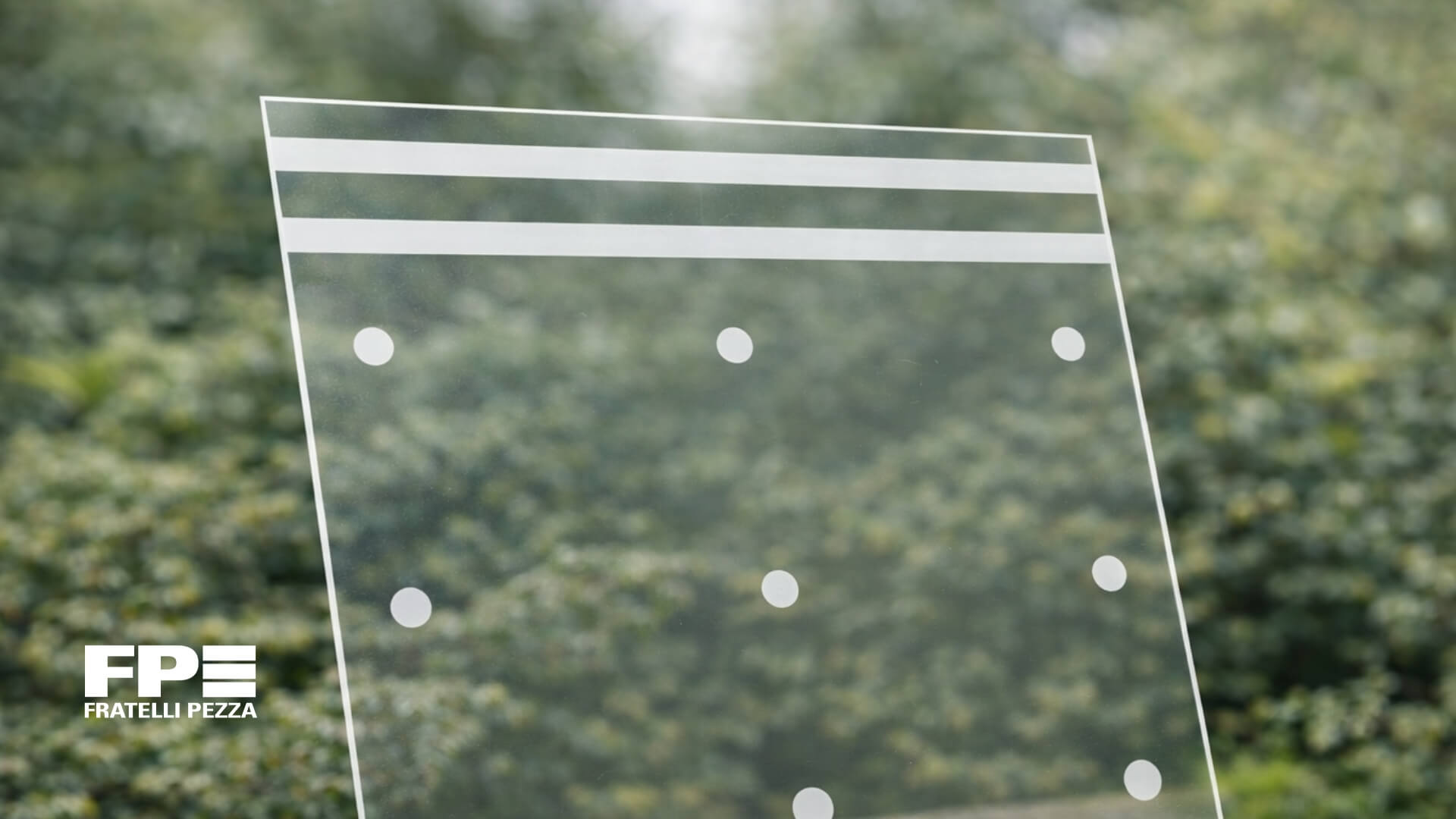
Bird-safe Glass and Sandblasting: A Practical Solution for Urban Birdlife
Increasing numbers of bird collisions with glazed building surfaces are being reported. These are not isolated incidents: with the growing use of glass in architecture, collisions with reflective surfaces are becoming more frequent and now represent one of the main threats to urban birdlife.
For glass manufacturers and processors, this trend also represents a new design opportunity. Today, technologies are available that can make glazed surfaces safer for birds without compromising aesthetics, functionality or glass quality. One of the most effective solutions is bird-safe glass created through sandblasting.
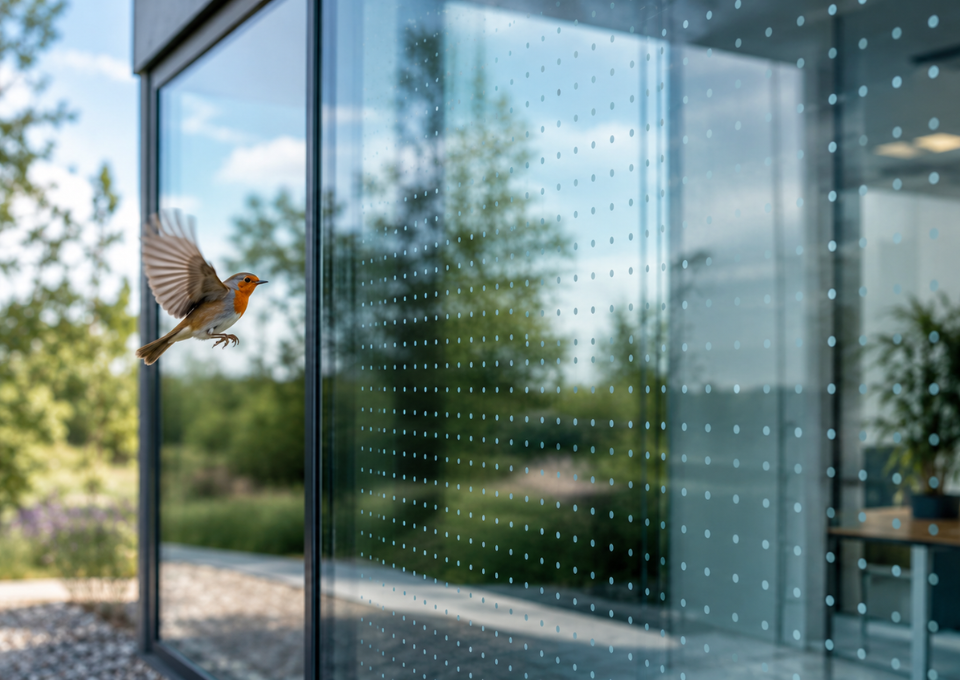
Why birds collide with Glass Surfaces
Birds do not perceive glass as a physical barrier. When a glazed surface reflects the sky, vegetation or the surrounding environment, birds mistake it for open space and fly into it at high speed. In many cases, the consequences are fatal.
The problem is particularly serious near:
- green areas, gardens and tree-lined spaces
- rivers, lakes and agricultural areas
- curtain walls, balconies and large glazed surfaces in residential and commercial buildings
As also highlighted by LIPU – an italian organization active in bird conservation with which we recently established contact – reports of birds found after colliding with glazed surfaces are increasing. This trend is directly linked to the growing use of glass in new buildings and renovation projects.
What is Bird-safe Glass and how does it work?
Bird-safe glass is a glazed surface processed in such a way that birds can perceive it without drastically altering its appearance. The aim is to break up the mirror effect or complete transparency of the glass by applying a pattern – a sequence of visible elements – that birds are able to recognise and therefore avoid.
To be effective, a bird-safe pattern must comply with scientifically validated standards, particularly the so-called “2×4 rule”: the elements of the pattern must be spaced no more than 5 cm vertically and 10 cm horizontally apart (2×4 inches, hence the name), evenly covering the surface. This allows even small birds enough time to recognise the visual signal and adjust their flight path.
Regulations and standards for the use of Glass in construction across Europe
At present, there is no single European directive regulating the treatment of glazed surfaces for bird protection. However, countries such as Switzerland, Germany and Austria have already introduced standards based on scientific research.
In countries such as the United States, Canada and China, the issue is more advanced and increasingly integrated into architectural and construction practices. In Italy, the path towards building regulations that include bird-safe requirements is still long, although awareness of the issue is steadily growing.
Glass sandblasting for Bird-safe Surfaces
Among the technologies currently available for producing bird-safe glass, glass sandblasting stands out for its quality, durability and versatility. It is therefore considered one of the most effective techniques.
The sandblasting process, which can be either automatic or manual, involves propelling micro-abrasive particles onto the glass surface using dedicated machinery, creating an even frosted texture. By applying masks or shaped stencils – such as the Amacor stencils used by Fratelli Pezza – it is possible to create precise and repeatable patterns fully compliant with international bird-safe standards.
The main advantages of sandblasting compared with other solutions include:
- Long-lasting durability: the treatment is permanent, integrated into the glass surface itself, and does not deteriorate due to weather exposure like adhesive films or paints.
- Controlled aesthetics: the level of opacity and the pattern can be customised, maintaining partial transparency where required while preserving the architectural design of the building.
- Production flexibility: sandblasting machinery can process large surfaces, flat sheets, curved glass and different thicknesses, adapting to any architectural context.
- Compatibility with different glass types: float glass, laminated glass, tempered glass and insulating glass units can all be treated through sandblasting.
Other existing solutions, such as adhesive films, external screens, UV printing or ceramic coatings, may be suitable in specific situations, but they often present limitations in terms of durability, visual impact or maintenance costs compared with integrated sandblasting.
The project with LIPU Bergamo: towards more sustainable architecture
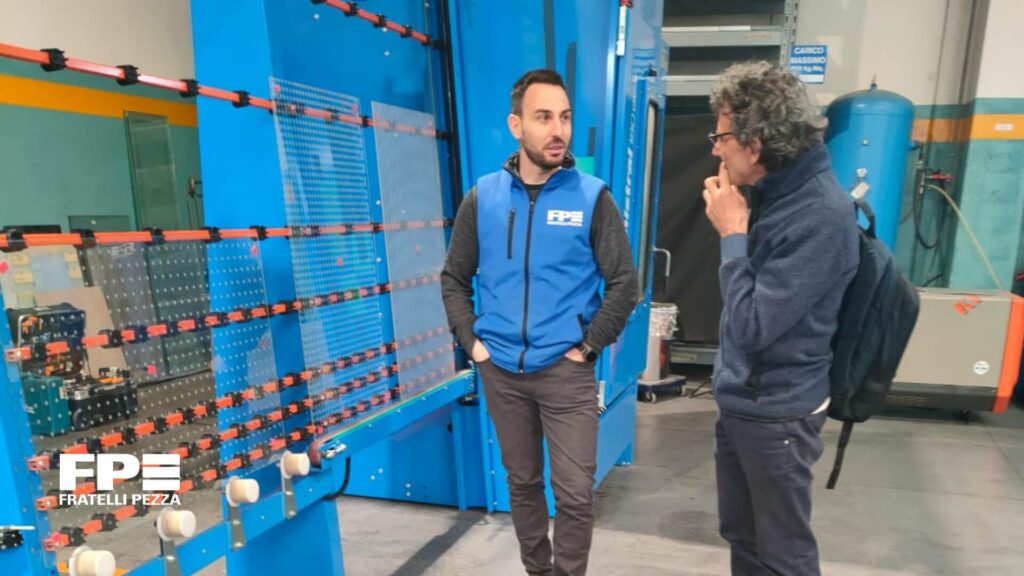
To help spread awareness of bird-safe solutions and encourage greater understanding of the issue, Fratelli Pezza recently collaborated with LIPU Bergamo, an organisation committed to bird conservation in the local area.
During the delegation’s visit to our headquarters in Clusone, sandblasted glass samples featuring two different bird-safe patterns were produced.
These samples will serve as practical communication tools and will be used during educational meetings and awareness activities aimed at:
- architects
- surveyors
- local authorities
- construction industry professionals
The purpose is to demonstrate first-hand what bird-safe glass looks like, how it works and why it makes a difference.
The ultimate goal is to encourage bird-friendly measures to become progressively integrated into local building regulations, allowing bird-safe glazed surfaces to become part of contemporary architectural design.
Would you like to produce Bird-safe Glass for your projects?
Integrating bird-safe glass into architectural projects means contributing to more sustainable construction practices that take biodiversity and the environmental impact of buildings into account.
Technologies for creating anti-collision surfaces already exist and make it possible to combine bird protection, aesthetic quality and glass functionality. Thanks to glass sandblasting and increasingly precise processing systems, these solutions can now be easily integrated into production processes while ensuring accurate and long-lasting results.
Fratelli Pezza manufactures glass sandblasting machinery used worldwide, with solutions suitable both for large-scale industrial production and for high-precision artisanal processing.
If you are a glassmaker, contractor or designer interested in integrating bird-safe processing into your production workflow, contact us: together we will find the solution best suited to your needs.