
Functional surfaces and sandblasting: new ways of understanding and working with glass
In 2026, glass processing definitively enters a new phase. Glass is no longer considered solely in terms of sheets, thicknesses or levels of transparency, but as a complex design surface, capable of interacting with light, people and the surrounding environment. As the market perspective changes, so do the criteria by which technologies, processes and suppliers are selected.
In this context, processes such as sandblasting, marking and surface protection cease to be ancillary operations and become central elements of the project.
Today, those who work with glass no longer limit themselves to producing a semi-finished or finished element, but contribute to creating a user experience: an expressive product with a distinct visual identity, designed to truly stand the test of time.
Glass as an active and functional surface
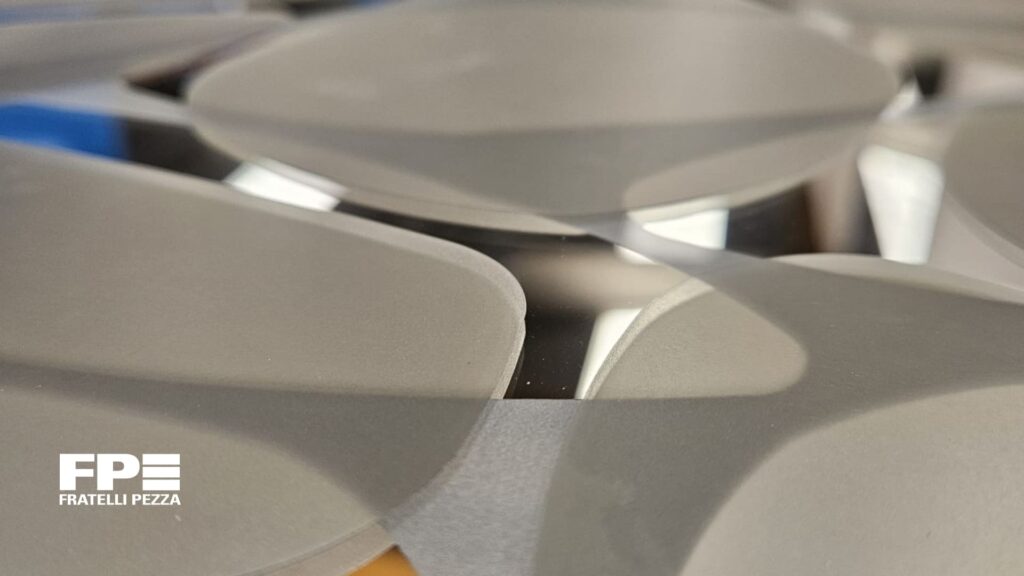
One of the most evident innovations concerns the new way glass is conceived. From a “passive” element, glass is now recognised and used as an “active” surface, endowed with extraordinary capabilities and therefore deserving to be integrated and highlighted within the environment in which it is installed.
Glass is used to modulate natural light, ensure privacy without rigid partitions, guide visual flows, communicate functions or define spaces in a non-invasive way. This applies to architecture, interior design, contract projects and many other fields, including a growing number of industrial applications.
In this context, glass sandblasting undergoes a profound shift in meaning. It is no longer simply a processing technique or an aesthetic effect to be achieved: today, sandblasting is understood as a design tool that makes it possible to create gradients, transitions, functional areas and differentiated opacity levels on the same surface, according to specific requirements and end uses.
Automatic glass sandblasting: from craftsmanship to a controlled industrial process
Today’s market demands consistent, controllable and repeatable results.
To meet these requirements, glass sandblasting evolves from a predominantly artisanal operation into a controlled industrial process, guided by a precise design intent. This is where solutions such as Mistral EV+ and the other automatic sandblasting machines by Fratelli Pezza come into play, designed to interpret sandblasting as an integral part of a modern production workflow.
Automatic sandblasting addresses very concrete market needs: reduced waste, higher production speed, quality standardisation and the ability to integrate and replicate the process within complex production lines. It is not simply a matter of “automation”, but of making the process measurable and repeatable, in line with the requirements of designers, architects and industrial clients. Craftsmanship remains a valuable asset, but it is supported and enhanced by technologies that guarantee control, efficiency and reliability.
From this perspective, the machine is no longer just an operational tool, but a true design partner.
Visual identity, communication and glass marking
New trends in the glass processing sector recognise a renewed and powerful communicative role for glass surfaces. Architecture, design and industry increasingly demand recognisable, coherent and identifiable surfaces. The use of marking processes and automatic glass marking machines therefore plays a key role in the current landscape.
Logos, graphic elements, textures, codes, technical or decorative information are permanently and precisely integrated directly into the glass surface. Marking is no longer a subsequent addition, but an integral part of the project: a brand identity element that does not compromise visual clarity or material quality.
For glass manufacturers, this represents a tangible added value: surfaces that not only perform a function, but also convey an identity.
Durability and glass surface protection
Another decisive change concerns the durability of glass processing. With the growing presence of sandblasted surfaces in high-traffic environments, a very clear question arises: how long does a finish really last over time?
In 2026, surface protection is no longer an optional extra, but a design requirement. Ease of cleaning, reduction of marks and halos, aesthetic stability and resistance to everyday use become selection criteria just as important as the initial visual impact.
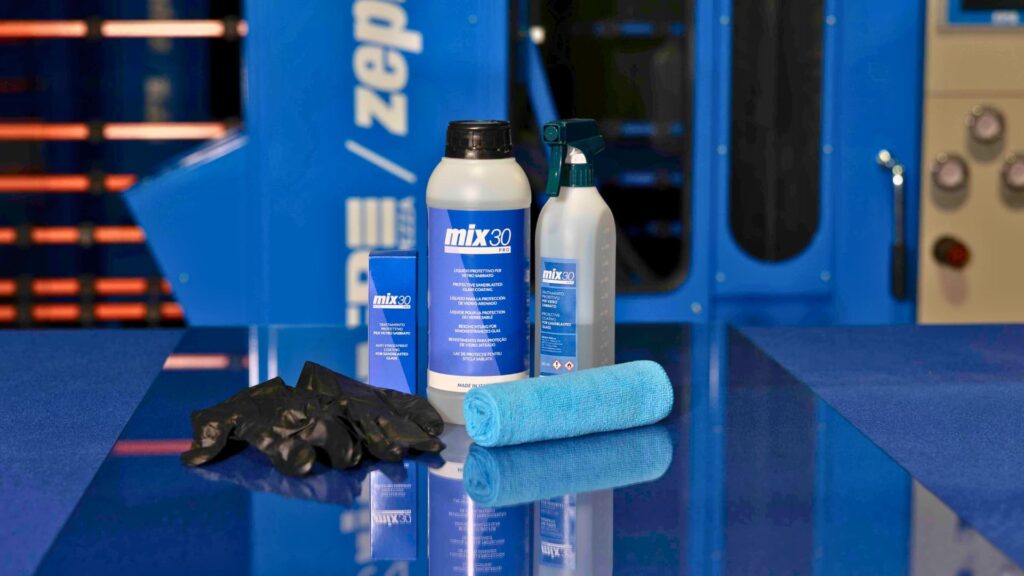
Glass is therefore conceived as a complete system, in which processing, protection and final use are closely interconnected. Specific treatments and products such as MIX30PRO, developed by Fratelli Pezza for transparent and sandblasted glass, respond to this need by integrating surface protection directly into the design logic, rather than as a subsequent intervention.
The present and future of glass processing
Companies that invest today in automation, process control and technological integration are not simply updating their machinery: they are choosing how to position themselves in the market of the coming years. Automatic sandblasting, marking and surface protection are no longer isolated technical choices, but tools that make it possible to transform a design intention into a concrete, coherent and durable result. It is within this continuity between design, process and long-term performance that the true value of glass processing is now measured — and it is on these foundations that the future of the sector will be built.
With over 50 years of experience in developing technologies for sandblasting, marking and glass surface protection, Fratelli Pezza fully embodies this vision. Our company is constantly focused on product evolution and on researching innovative solutions, both from a technical and operational standpoint, in order to offer end customers concrete, reliable industrial solutions designed to last over time.